…and
Farming is an occupation of always striving to do better. “Better” being a subjective word of course. It could mean better at marketing, better at production per acre, better at reducing crop loss, so on and so forth. Organic farming, at least the way I think it was initially intended to be practiced, means that I am always striving to be a better steward of the land.
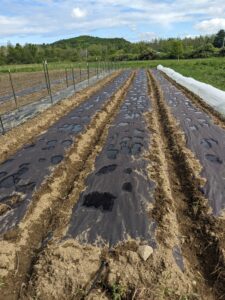
For years I have been trying to find better ways to reduce plastic use on the farm. With all the more recent news around microplastics I have been even more focused on it. So I was very excited this year when my farm was selected to be part of a paper mulching trial run by Vic Izzo at the University of Vermont. I am going to be using it for my field cucumbers, summer squash, watermelons, and melons. It is replacing woven plastic mulch, also known as landscape fabric.
Some of you may be wondering why I use any mulch, or what crops I determine need to be mulched and others I don’t? These are questions I ask myself all of the time. In a romanticized bucolic world there would be no mulch at all. The image of perfectly straight, weedless, green filled rows is what I want to see, what we all want to see. But in reality, how weed suppression is accomplished is a key difference between organic and conventional farms. Weeds and weeding are part of organic farming. Figuring out how to do it economically for the scale and type of farming is key.
Mulching is primarily used for weed suppression. When used successfully, it can reduce the amount of time spent weeding significantly. But it also has many other very important benefits. It is great at soil moisture control, and it can heat or cool the soil depending on the color mulch being used. Another extremely important function is it keeps crops clean of dirt, disease and pests while they are in the field. This can significantly reduce crop loss, harvest time, and post-harvest handling.
If all that doesn’t make you wiggle with joy then you probably are not a farmer. So let me tell you a story about worms…